2026 Unemployment Benefits: State-by-State Maximum Payouts Explained

Advertisement
In an ever-evolving economic landscape, understanding your potential financial safety nets is paramount. For countless individuals, unemployment benefits serve as a crucial lifeline during periods of job transition. As we look ahead to 2026, it’s essential to grasp how these benefits are structured, especially given the significant variations from state to state. This comprehensive guide will delve into the intricacies of 2026 unemployment benefits, providing a detailed state-by-state analysis of maximum payouts, eligibility requirements, and application procedures. Our aim is to equip you with the knowledge needed to navigate this complex system effectively, ensuring you’re prepared should the need arise.
Navigating 2026 Unemployment Benefits: A Comprehensive Guide
The unemployment insurance (UI) program in the United States is a joint federal-state initiative, meaning that while federal guidelines set a broad framework, each state administers its own program with distinct rules. This decentralization leads to significant differences in benefit amounts, duration, eligibility criteria, and even the application process. For those facing or anticipating job loss in 2026, understanding these state-specific nuances is not just helpful, it’s critical. Our focus here is to shed light on these variations, particularly concerning the maximum payouts you might expect.
Understanding the Basics of Unemployment Insurance
Before diving into state-specific details, let’s establish a foundational understanding of how unemployment insurance works. UI benefits are temporary payments to workers who have lost their jobs through no fault of their own. They are designed to provide partial wage replacement, helping individuals cover essential living expenses while they search for new employment. The funds for these benefits come from taxes paid by employers, not from the employees’ paychecks.
Advertisement
Key Components of Unemployment Benefits:
- Eligibility Criteria: Generally, you must have worked a certain amount of time and earned a minimum amount of wages during a ‘base period’ (typically the first four of the last five completed calendar quarters before you filed your claim). You must also be unemployed through no fault of your own, able and available to work, and actively seeking employment.
- Weekly Benefit Amount (WBA): This is the amount of money you receive each week. It’s usually calculated as a percentage of your earnings during your base period, up to a state-defined maximum.
- Maximum Benefit Duration: Most states provide benefits for up to 26 weeks, though some states offer fewer or more weeks, and extended benefits can be triggered during periods of high unemployment.
- Waiting Period: Many states have a one-week waiting period before benefits begin, meaning you won’t receive payment for the first week you are eligible.
These components are subject to change, and the economic climate leading up to 2026 could influence federal and state policies. Therefore, staying informed about the latest regulations is crucial for anyone seeking 2026 unemployment benefits.
Factors Influencing Maximum Payouts in 2026
The maximum weekly benefit amount is often the most significant differentiator between state programs. This figure is not arbitrary; it’s determined by several factors, including:
State Economic Conditions:
States with higher average wages and a stronger economy tend to have higher maximum weekly benefit amounts. This is because the UI system aims to replace a portion of a worker’s previous wages, and those wages are higher in more prosperous states.
Advertisement
Legislative Decisions:
State legislatures regularly review and adjust their unemployment insurance laws. These adjustments can be influenced by current economic conditions, budget considerations, and political priorities. Changes enacted in 2025 or even early 2026 could directly impact the maximum payouts available.
Cost of Living:
While not a direct calculation factor, the cost of living within a state often correlates with the maximum benefit amount. States with a higher cost of living may feel more pressure to offer higher benefits to provide meaningful support to unemployed residents.
Trust Fund Solvency:
Each state maintains an unemployment insurance trust fund. The solvency of this fund can influence legislative decisions regarding benefit levels and employer tax rates. States with healthier trust funds might be more inclined to maintain or increase benefit levels, whereas those with depleted funds might consider reductions.
Understanding these underlying factors helps paint a clearer picture of why 2026 unemployment benefits will vary so much across the nation.
State-by-State Maximum Payouts for 2026 (Projected)
Predicting exact maximum payouts for 2026 can be challenging, as these figures are often adjusted annually or biennially. However, by analyzing current trends, historical data, and known legislative schedules, we can project a reasonable range and highlight states that typically offer higher or lower benefits. It’s important to note that these are projections and actual figures for 2026 will be released by each state’s labor department.
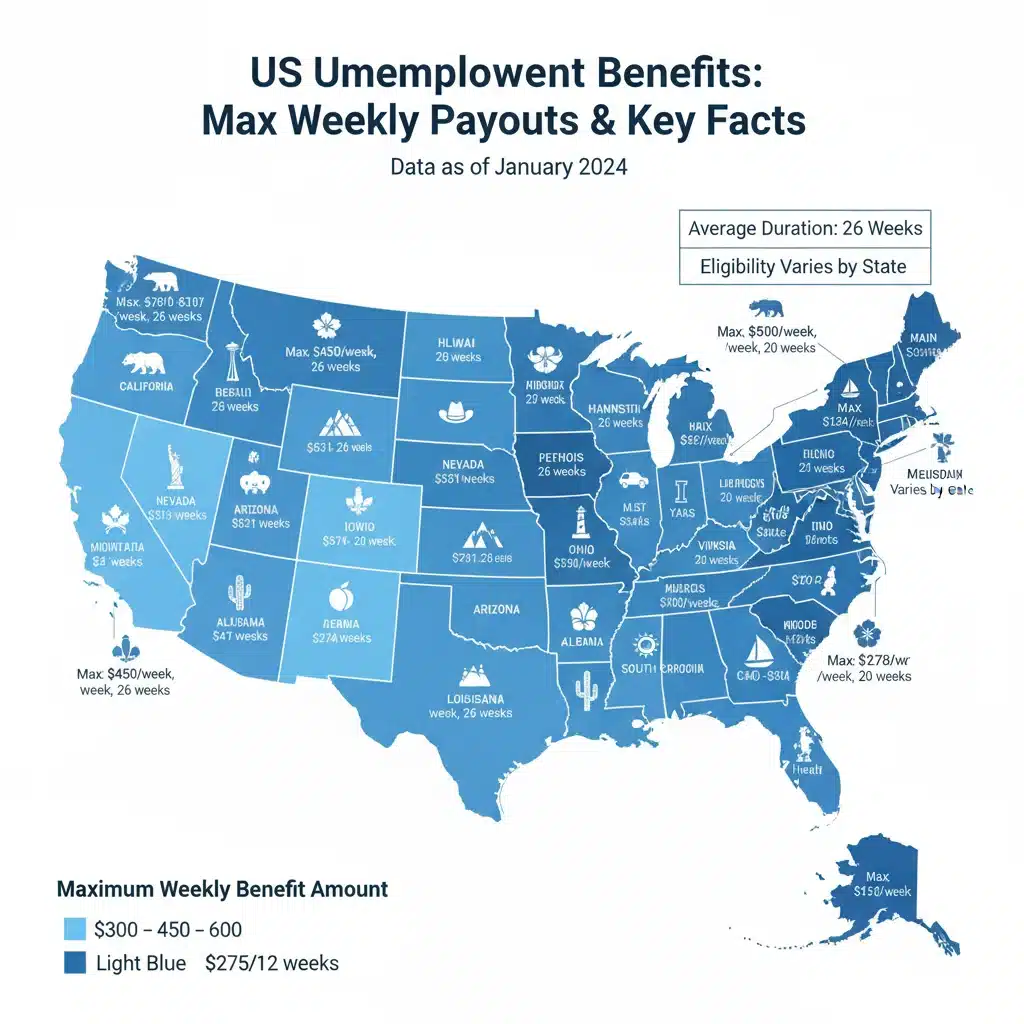
States with Potentially Higher Maximum Benefits (e.g., Massachusetts, New Jersey, Washington):
These states have historically offered some of the most generous maximum weekly benefits. For instance, Massachusetts has often linked its benefits to a percentage of the state’s average weekly wage, leading to higher payouts. New Jersey and Washington also typically feature higher maximums, reflecting their strong economies and higher cost of living. Individuals in these states might anticipate maximum weekly benefits in the range of $800 to $1,200 or more, depending on individual earnings and any dependents.
States with Mid-Range Maximum Benefits (e.g., California, New York, Pennsylvania, Illinois):
Many populous states fall into this category, offering substantial, but not top-tier, maximum benefits. California, for example, has a significant workforce and a robust UI system, with maximum benefits often in the $450-$550 range. New York and Pennsylvania also typically provide benefits in a similar bracket. These states represent the median for 2026 unemployment benefits, balancing economic support with state budget considerations.
States with Potentially Lower Maximum Benefits (e.g., Alabama, Mississippi, Arizona):
Certain states, often those with lower average wages and a lower cost of living, tend to have lower maximum weekly benefit amounts. States like Alabama and Mississippi have historically had some of the lowest maximum payouts, sometimes below $300 per week. Arizona also tends to be on the lower end of the spectrum. While these amounts can still provide crucial support, they represent a smaller percentage of previous earnings for many individuals.
Important Note: The exact figures for 2026 will be formally published by each state’s unemployment agency. It is always advisable to check the official website of your specific state’s Department of Labor or equivalent agency for the most accurate and up-to-date information regarding 2026 unemployment benefits. The information provided here is for general guidance and projection purposes.
Eligibility Requirements for 2026 Unemployment Benefits
Beyond the maximum payout, understanding eligibility is crucial. While federal guidelines provide a baseline, each state sets its own specific criteria. Here are the common requirements you can expect for 2026 unemployment benefits:
1. Monetary Eligibility:
- Base Period Wages: You must have earned a certain amount of wages during your state’s ‘base period.’ This is typically the first four of the last five completed calendar quarters prior to the quarter in which you file your claim. Each state has a minimum earnings threshold.
- Sufficient Work History: You must have worked a sufficient number of weeks or earned a minimum amount of wages during your base period to qualify. This ensures that only those with a recent attachment to the workforce receive benefits.
2. Separation from Employment:
- No Fault of Your Own: You must be unemployed through no fault of your own. This generally means you were laid off, your position was eliminated, or you were furloughed.
- Voluntary Quits: If you quit your job voluntarily, you are generally not eligible for benefits unless you had ‘good cause’ for quitting, such as unsafe working conditions, harassment, or a significant change in working conditions imposed by the employer. The definition of ‘good cause’ varies by state.
- Fired for Misconduct: If you were fired for misconduct, you are typically disqualified from receiving benefits. ‘Misconduct’ is also defined by state law and can range from absenteeism to insubordination.
3. Ongoing Eligibility Requirements:
- Able and Available for Work: You must be physically and mentally able to work and available for suitable employment during the weeks you are claiming benefits.
- Actively Seeking Work: Most states require you to actively search for new employment. This often involves keeping a detailed log of job applications, interviews, and other job search activities. The number of required job contacts per week varies by state.
- Reporting Requirements: You must file weekly or bi-weekly claims, certifying your eligibility and reporting any earnings from part-time work or other sources.
Failing to meet any of these eligibility criteria can result in denial or disqualification from 2026 unemployment benefits. It is imperative to be truthful and accurate in all your submissions.
The Application Process for 2026 Unemployment Benefits
While the specifics vary, the general process for applying for 2026 unemployment benefits will follow a similar pattern across most states. It’s crucial to apply as soon as you become unemployed, as benefits are not retroactive to the date of job loss but typically begin from the date you file your claim (after any waiting period).
Step-by-Step Application Guide:
- Gather Necessary Information: Before you begin, collect all relevant documents. This typically includes:
- Social Security number
- Driver’s license or state ID number
- Your mailing address and phone number
- Names and addresses of all employers for the last 18-24 months, along with dates of employment and reasons for separation
- Your gross earnings from each employer
- Bank account information for direct deposit (recommended)
- Alien registration number and expiration date if you are not a U.S. citizen
- File Your Claim Online or by Phone: Most states strongly encourage or even require online filing through their state unemployment agency’s website. This is generally the fastest and most efficient method. Phone applications are also usually available for those without internet access or with specific needs.
- Serve the Waiting Period: Many states have a one-week waiting period. You will file a claim for this week, but you will not receive payment for it. Benefits typically begin after this period.
- Certify for Benefits Regularly: To continue receiving benefits, you must ‘certify’ (usually weekly or bi-weekly) that you are still unemployed, able and available for work, and actively seeking employment. You will also report any earnings from temporary work during this period.
- Engage in Job Search Activities: Fulfill your state’s job search requirements. Keep meticulous records of your job applications, interviews, and networking efforts, as you may be required to submit them.
- Be Responsive to Agency Requests: The unemployment agency may contact you for additional information or to schedule an interview. Promptly respond to all communications to avoid delays or disqualification.

Common Pitfalls to Avoid:
- Delaying Your Application: Benefits are not retroactive to your last day of work, so apply immediately.
- Providing Inaccurate Information: Misrepresenting facts can lead to disqualification and even penalties.
- Failing to Meet Job Search Requirements: If you don’t actively look for work, your benefits can be terminated.
- Ignoring Agency Communications: Unanswered calls or letters can lead to your claim being denied or benefits being stopped.
Special Considerations and Extended Benefits for 2026
While the standard unemployment program provides up to 26 weeks of benefits in most states, there are situations where additional support might be available. It’s important to be aware of these possibilities when considering 2026 unemployment benefits.
Extended Benefits (EB):
The Extended Benefits (EB) program provides additional weeks of unemployment benefits during periods of high unemployment. This is a federal-state program that is triggered when a state’s insured unemployment rate reaches a certain threshold. The duration of EB can vary, typically offering an additional 13 or 20 weeks of benefits. Whether EB will be active in any state in 2026 depends entirely on the prevailing economic conditions at that time.
Disaster Unemployment Assistance (DUA):
In the event of a presidentially declared major disaster, individuals who are unemployed as a direct result of the disaster and who are not eligible for regular unemployment insurance may be eligible for Disaster Unemployment Assistance (DUA). This program is entirely federally funded and administered by state unemployment agencies. While unpredictable, it’s a critical safety net for those affected by natural catastrophes.
Trade Adjustment Assistance (TAA):
The Trade Adjustment Assistance (TAA) program provides aid to workers who have lost their jobs or whose hours of work and wages have been reduced as a result of increased imports or shifts in production to foreign countries. TAA services include training, job search and relocation allowances, and income support. This is a specialized program that might apply to a smaller subset of the unemployed population, but it offers significant benefits for eligible individuals.
Temporary Programs:
Historically, during severe economic downturns (such as the 2008 financial crisis or the COVID-19 pandemic), Congress has enacted temporary federal unemployment programs. These programs often expand eligibility, increase weekly benefit amounts, or extend the duration of benefits. While there are no such programs currently slated for 2026, it’s crucial to stay informed about potential legislative actions if economic conditions deteriorate significantly.
Staying updated on these potential avenues for additional support is part of a comprehensive approach to understanding 2026 unemployment benefits.
The Impact of Earnings and Taxes on 2026 Unemployment Benefits
It’s a common misconception that unemployment benefits are entirely tax-free or that any earnings will completely disqualify you. Understanding how earnings and taxes affect your 2026 unemployment benefits is vital for financial planning.
Earnings While Receiving Benefits:
Most states allow you to earn a certain amount of money while receiving unemployment benefits without losing your full weekly benefit amount. Typically, states will disregard a portion of your earnings (e.g., the first $50 or 25% of your WBA) and then reduce your benefits dollar-for-dollar for earnings above that threshold. It is absolutely critical to report all earnings, no matter how small, when you certify for benefits. Failure to do so can lead to overpayments, which you will be required to repay, potentially with penalties.
Taxation of Unemployment Benefits:
Unemployment benefits are considered taxable income at the federal level. This means you will need to report them on your federal income tax return. Many states also tax unemployment benefits, though some do not. When you apply for benefits, you usually have the option to have federal income tax (and sometimes state tax) withheld from your weekly payments. This can help prevent a large tax bill at the end of the year. If you don’t opt for withholding, it’s wise to set aside a portion of your benefits to cover your tax obligations.
Impact on Other Benefits:
Receiving unemployment benefits can sometimes affect eligibility for other assistance programs, such as Medicaid, SNAP (food stamps), or housing assistance, as they are considered income. It’s advisable to check with the administrators of any other benefits you receive to understand how unemployment insurance might impact them.
Careful financial planning, including considering the tax implications and the effect of partial earnings, is an important aspect of managing 2026 unemployment benefits.
Preparing for Potential Job Loss in 2026
While no one hopes to face unemployment, being prepared can significantly ease the burden if it occurs. Proactive steps can help you maximize your potential 2026 unemployment benefits and ensure a smoother transition.
1. Build an Emergency Fund:
The most crucial step is to have an emergency fund. Aim for at least three to six months’ worth of living expenses. This fund can bridge the gap during the waiting period for benefits and supplement your weekly benefit amount, which is typically less than your previous wages.
2. Understand Your State’s Rules:
Familiarize yourself with your state’s unemployment insurance website. Understand their specific eligibility criteria, weekly benefit calculation methods, maximum payouts, and job search requirements. Knowing this information beforehand can expedite your application process.
3. Keep Detailed Employment Records:
Maintain records of your employment history, including start and end dates, employers’ contact information, and wage statements. This will be invaluable when you need to provide information for your application.
4. Update Your Resume and Network:
Always keep your resume updated and maintain a professional network. Being ready to actively seek new employment as soon as you become unemployed is a key requirement for receiving benefits and will also hasten your return to work.
5. Explore Other Resources:
Beyond unemployment benefits, research other resources available in your community or state, such as job training programs, career counseling services, and social service agencies that can provide additional support during unemployment.
By taking these proactive steps, you can significantly enhance your ability to navigate the challenges of unemployment and leverage the support offered by 2026 unemployment benefits.
Conclusion: Staying Informed on 2026 Unemployment Benefits
The landscape of unemployment benefits is dynamic, shaped by federal guidelines, state legislation, and prevailing economic conditions. As we approach 2026, the variations in maximum payouts, eligibility, and application procedures across different states will continue to be a defining characteristic of the program. Our detailed state-by-state analysis aims to provide a clear picture of what to expect, but the onus remains on individuals to stay informed.
Remember that the information provided here is a projection and general guide. For the most accurate and personalized information regarding your specific situation and state, always consult the official website of your state’s Department of Labor or equivalent agency. Being prepared, understanding the requirements, and acting promptly are your best strategies for successfully accessing 2026 unemployment benefits should the need arise. Your financial well-being during periods of job transition depends on it.