Fed Rate Decision 2026: Mortgage Impact & Future Outlook
Advertisement
Urgent Update: Federal Reserve’s Latest Interest Rate Decision and Its Immediate Impact on US Mortgages in 2026
The financial landscape of the United States is perpetually in motion, with the Federal Reserve acting as a pivotal architect of its direction. As we look ahead to 2026, the anticipation surrounding the Fed rate decision 2026 is reaching a fever pitch among economists, homeowners, and prospective buyers alike. The decisions made by the Federal Open Market Committee (FOMC) regarding interest rates have a ripple effect that touches every corner of the economy, but perhaps nowhere is this impact felt more directly and profoundly than in the US mortgage market. Understanding these dynamics is not just academic; it’s crucial for prudent financial planning and strategic decision-making in the coming years.
This comprehensive article will delve into the intricate details of what the Fed rate decision 2026 could entail, exploring the various economic indicators that will likely influence the FOMC’s stance. We will analyze the potential scenarios for interest rate adjustments – whether they rise, fall, or remain stable – and meticulously break down the immediate and long-term consequences for US mortgages. From fixed-rate to adjustable-rate mortgages, refinancing opportunities, and the overall affordability of housing, we will cover all angles to provide you with a clear and actionable understanding of what to expect. Preparing for these shifts now can make a significant difference in your financial well-being, allowing you to navigate the complexities of the market with confidence and foresight.
Advertisement
The Federal Reserve’s Role and the Anticipated Fed Rate Decision 2026
The Federal Reserve, often referred to as ‘the Fed,’ serves as the central bank of the United States. Its primary mandates include maximizing employment, stabilizing prices, and moderating long-term interest rates. The tool most frequently used to achieve these goals is the Federal Funds Rate – the target rate for interbank lending overnight. Changes to this rate directly influence other interest rates throughout the economy, including those for consumer loans, business loans, and most notably, mortgages. Therefore, the Fed rate decision 2026 is not just a headline event; it’s a fundamental economic pivot point.
Understanding the FOMC and Its Decision-Making Process
The Federal Open Market Committee (FOMC) is the monetary policy-making body of the Federal Reserve System. It consists of twelve members: the seven members of the Board of Governors of the Federal Reserve System; the president of the Federal Reserve Bank of New York; and presidents of four other Federal Reserve Banks on a rotating basis. This committee meets eight times a year, approximately every six weeks, to assess economic conditions and determine the appropriate course for monetary policy. Their decisions are not made in a vacuum; they are the result of extensive analysis of a multitude of economic indicators, forecasts, and global financial conditions.
Leading up to the Fed rate decision 2026, the FOMC will be scrutinizing key data points such as inflation rates (CPI, PCE), employment figures (unemployment rate, job growth, wage growth), Gross Domestic Product (GDP) growth, consumer spending, business investment, and international economic developments. Each of these indicators provides a piece of the puzzle, influencing the committee’s outlook on the economy’s health and the need for tightening or easing monetary policy. A robust economy with low unemployment and rising inflation might prompt the Fed to consider rate hikes to prevent overheating, while a slowing economy with concerns about deflation could lead to rate cuts to stimulate growth. The delicate balance required to achieve both maximum employment and price stability makes the Fed rate decision 2026 a complex and highly anticipated event.
Advertisement
Key Economic Indicators Influencing the Fed Rate Decision 2026
To truly grasp the potential outcomes of the Fed rate decision 2026, it’s essential to understand the primary economic indicators that guide the Federal Reserve’s policy choices. These indicators provide a snapshot of the economy’s health and future trajectory, informing whether the Fed will lean towards tightening (raising rates) or easing (lowering rates) monetary policy.
Inflation: The Persistent Watchdog
Inflation, specifically the Personal Consumption Expenditures (PCE) price index, is the Fed’s preferred measure for price stability. The FOMC generally targets an inflation rate of 2% over the longer run. If inflation remains stubbornly above this target as we approach 2026, the Fed might be compelled to maintain higher interest rates or even implement further hikes to cool the economy and bring prices back into line. Conversely, if inflationary pressures subside or if there’s a risk of deflation, the Fed could consider lowering rates to stimulate demand. The trajectory of inflation will be a paramount factor in the Fed rate decision 2026.
Employment: The Dual Mandate
The second pillar of the Fed’s dual mandate is maximum employment. The unemployment rate, non-farm payrolls, and wage growth are closely monitored. A strong labor market with low unemployment and healthy wage increases typically indicates a robust economy, which could give the Fed more leeway to address inflation through rate adjustments. However, if the labor market shows signs of weakening, with rising unemployment or stagnant wage growth, the Fed might prioritize employment stability, potentially leading to a more dovish stance on interest rates. The balance between full employment and stable prices will heavily inform the Fed rate decision 2026.
Economic Growth: GDP and Consumer Spending
Gross Domestic Product (GDP) provides a broad measure of economic activity, while consumer spending, which accounts for a significant portion of GDP, reflects household confidence and demand. Sustained strong GDP growth and robust consumer spending could support a higher interest rate environment, as the economy can absorb the increased cost of borrowing. Conversely, a slowdown in economic growth or a significant drop in consumer confidence might necessitate lower rates to stimulate economic activity. The overall health and momentum of the US economy will be a critical determinant for the Fed rate decision 2026.
Immediate Impact on US Mortgages from the Fed Rate Decision 2026
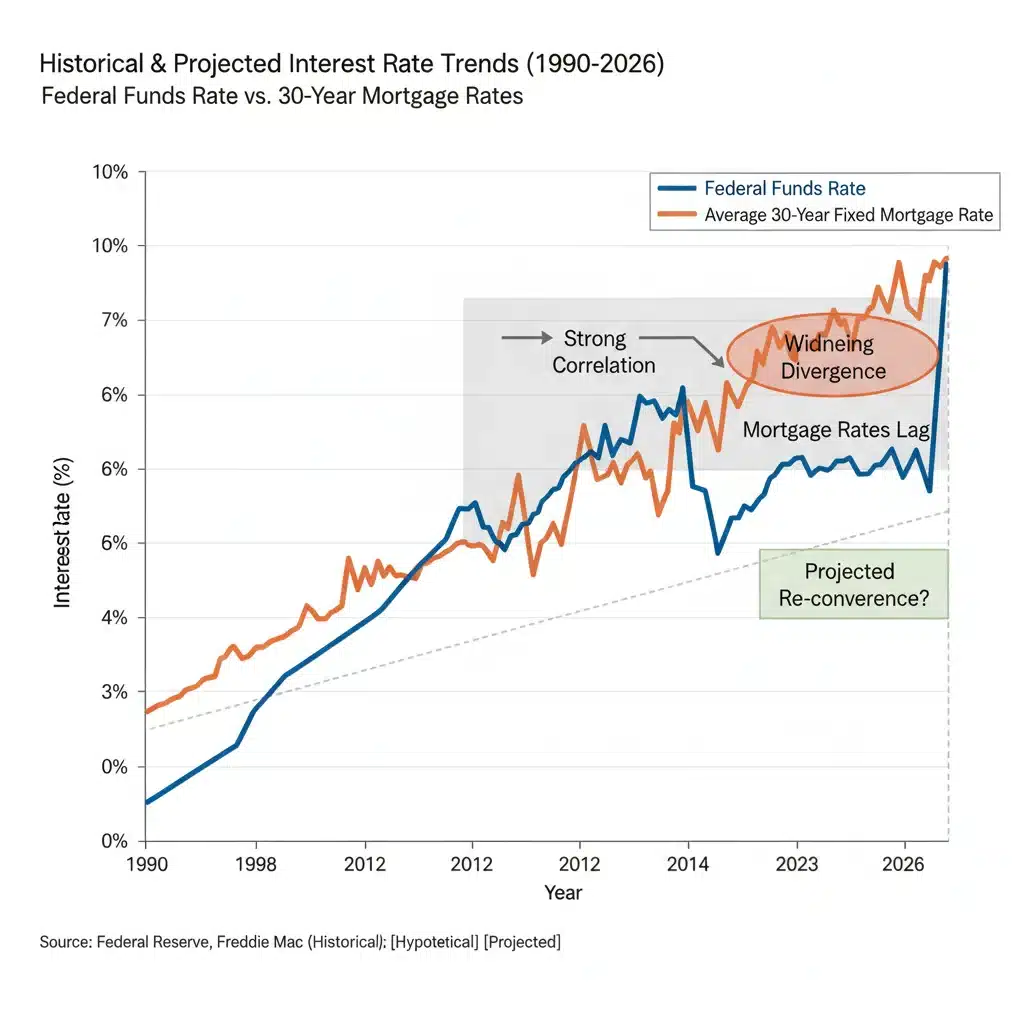
The connection between the Federal Funds Rate and mortgage rates is often misunderstood, yet it’s incredibly direct and impactful. While the Federal Funds Rate is an overnight lending rate for banks, it sets a baseline for other short-term rates, and its movements often signal the Fed’s outlook on the economy, which in turn influences longer-term rates like those for 30-year fixed mortgages. Therefore, the Fed rate decision 2026 will reverberate throughout the entire US mortgage market.
Fixed-Rate Mortgages: Stability vs. Cost
For homeowners with fixed-rate mortgages, the immediate impact of a Fed rate decision 2026 might not be felt directly on their existing payments. Their interest rate is locked in for the life of the loan. However, for prospective homebuyers or those looking to refinance, any change in the Federal Funds Rate can significantly alter the cost of a new fixed-rate mortgage. If the Fed raises rates, new fixed-rate mortgages will likely become more expensive, increasing monthly payments and overall borrowing costs. Conversely, a rate cut could lead to lower mortgage rates, making homeownership more accessible and refinancing more attractive. This sensitivity makes timing crucial for those considering a fixed-rate loan.
Adjustable-Rate Mortgages (ARMs): Direct Exposure to Rate Changes
Adjustable-Rate Mortgages (ARMs) are far more susceptible to changes stemming from the Fed rate decision 2026. ARMs typically have an initial fixed-rate period (e.g., 5/1 ARM, 7/1 ARM), after which the interest rate adjusts periodically based on a chosen index, often tied to a short-term Treasury yield or the SOFR (Secured Overnight Financing Rate). Since these indices are closely correlated with the Federal Funds Rate, a hike by the Fed would likely lead to higher interest rates on ARMs at their adjustment periods, increasing monthly payments for borrowers. Conversely, a rate cut would provide relief by lowering those payments. Borrowers with ARMs need to pay close attention to the Fed rate decision 2026 and subsequent market reactions, as their financial obligations could change substantially.
Refinancing Opportunities: Timing is Everything
The prospect of refinancing is heavily influenced by the Fed rate decision 2026. If the Fed signals a period of lower interest rates, many homeowners will rush to refinance their existing mortgages to secure a lower rate, reduce their monthly payments, or shorten their loan term. This can lead to significant long-term savings. However, if rates are expected to rise, the window for advantageous refinancing might close, prompting homeowners to act quickly or reconsider their options. The decision to refinance is complex, involving closing costs, break-even points, and individual financial goals, but the overarching direction of Fed policy provides a critical framework for this decision.
Long-Term Implications of the Fed Rate Decision 2026 on the Housing Market
Beyond the immediate shifts in mortgage rates, the Fed rate decision 2026 carries significant long-term implications for the broader housing market, affecting everything from home affordability to supply and demand dynamics, and even investment strategies.
Home Affordability and Buyer Demand
Higher interest rates resulting from the Fed rate decision 2026 directly translate to higher monthly mortgage payments, reducing purchasing power for prospective homebuyers. This can cool buyer demand, especially in competitive markets, making homes less affordable for a larger segment of the population. Conversely, lower rates can boost affordability, stimulating demand and potentially driving up home prices due to increased competition. The long-term trajectory of homeownership rates and demographic shifts will be intertwined with the Fed’s policy choices.
Housing Supply and New Construction
The cost of borrowing isn’t just a concern for homebuyers; it also impacts homebuilders and developers. Higher interest rates can increase the cost of financing construction projects, potentially slowing down new housing starts. This could exacerbate existing supply shortages in certain regions, further influencing home prices. If the Fed rate decision 2026 leads to sustained higher rates, we might see a more constrained housing supply over the long term, impacting the equilibrium of the market. Conversely, lower rates can incentivize new construction, helping to alleviate supply pressures.
Impact on Home Equity and Investment
Changes in mortgage rates, driven by the Fed rate decision 2026, can also affect homeowners’ equity. While rising rates don’t directly reduce equity, they can slow the rate of appreciation if demand cools. For real estate investors, interest rate movements are a critical factor in calculating returns on investment properties. Higher rates can make rental property investments less attractive due to increased financing costs, potentially shifting investment capital to other asset classes. Understanding these long-term ripple effects is vital for anyone with a stake in the real estate market.
Strategies for Homeowners and Buyers in Response to the Fed Rate Decision 2026
Given the significant influence of the Fed rate decision 2026 on mortgages and the broader housing market, proactive planning is essential. Whether you’re a current homeowner or aspiring to purchase a home, there are several strategies you can employ to mitigate risks and capitalize on potential opportunities.
For Prospective Homebuyers: Preparing for Rate Shifts
If you’re planning to buy a home in 2026, closely monitor economic forecasts and the Fed’s communications leading up to the Fed rate decision 2026. Get pre-approved for a mortgage to understand your borrowing capacity at current rates. Consider locking in an interest rate if you find a favorable one, especially if the consensus points towards future rate hikes. Building a strong credit score and saving for a larger down payment can also provide a buffer against higher interest rates, allowing you to secure better loan terms regardless of the Fed’s actions. Explore different loan products, including FHA, VA, and conventional loans, to find the best fit for your financial situation.
For Current Homeowners: Evaluating Refinancing and Equity Options
Current homeowners should regularly evaluate their mortgage situation. If you have an adjustable-rate mortgage (ARM) and the Fed rate decision 2026 is expected to lead to rate increases, consider refinancing into a fixed-rate mortgage to lock in your payments and avoid future volatility. Even with a fixed-rate mortgage, if rates drop significantly, refinancing could still be beneficial. Additionally, consider how interest rate changes might affect your home equity. While a cash-out refinance might be tempting, assess the long-term costs carefully. Home equity lines of credit (HELOCs) are also sensitive to interest rate changes, so understanding their terms is crucial.
Financial Planning and Consultation
Regardless of your position, consulting with a qualified financial advisor or mortgage professional is invaluable. They can provide personalized advice based on your specific financial situation and risk tolerance, helping you interpret the implications of the Fed rate decision 2026. A professional can help you model different interest rate scenarios, assess the true cost of borrowing, and develop a robust financial plan that accounts for potential market shifts. This expert guidance can be the difference between merely reacting to market changes and proactively shaping your financial future.

The Global Economic Context and the Fed Rate Decision 2026
It’s important to recognize that the Fed rate decision 2026 does not occur in a vacuum. The global economic landscape, including geopolitical events, international trade relations, and the monetary policies of other major central banks (like the European Central Bank or the Bank of Japan), can significantly influence the Federal Reserve’s decisions and their ultimate impact on the US economy and mortgage market.
Geopolitical Events and Market Volatility
Global political instability, conflicts, or significant international policy shifts can introduce uncertainty into financial markets. In times of heightened global risk, investors often seek safe-haven assets, which can influence bond yields and, by extension, mortgage rates. The Fed might also adjust its stance to account for these external pressures, aiming to stabilize the domestic economy. Therefore, the Fed rate decision 2026 will likely be made with a keen eye on the global geopolitical stage.
International Trade and Supply Chains
Disruptions to global supply chains or shifts in international trade policies can impact inflation, economic growth, and employment within the US. For instance, tariffs or trade disputes could lead to higher import costs, contributing to inflationary pressures that the Fed might need to address through interest rate adjustments. Conversely, improved trade relations could ease supply constraints and dampen inflation. The interconnectedness of the global economy means that international trade dynamics will play a role in shaping the context for the Fed rate decision 2026.
Other Central Banks’ Policies
While the Federal Reserve acts independently, it cannot ignore the monetary policies of other major central banks. If other developed economies are raising or lowering their rates, it can affect currency exchange rates, capital flows, and the competitiveness of US exports. The Fed might consider these international dynamics to avoid significant currency fluctuations or to maintain a certain level of economic stability relative to global partners. The synchronized or divergent actions of central banks worldwide will be a subtle yet important factor in the calculus leading up to the Fed rate decision 2026.
Conclusion: Navigating the Future of Mortgages with the Fed Rate Decision 2026
The Fed rate decision 2026 stands as a critical juncture for the US economy and, more specifically, for the millions of Americans navigating the mortgage market. The Federal Reserve’s choices regarding interest rates will have a profound and lasting impact on home affordability, refinancing opportunities, and the overall health of the housing sector. While the exact outcome remains to be seen, a thorough understanding of the economic indicators, the Fed’s decision-making process, and the direct and indirect consequences is paramount for informed financial planning.
As we approach 2026, diligent monitoring of inflation, employment data, and global economic trends will provide valuable clues about the Fed’s likely direction. For homeowners, this means continually assessing your mortgage terms and exploring refinancing options. For prospective buyers, it involves strengthening your financial position and understanding how rate shifts can affect your purchasing power. Engaging with financial professionals can offer tailored guidance, helping you to make strategic decisions that align with your long-term goals.
Ultimately, the ability to adapt and plan in anticipation of the Fed rate decision 2026 will empower individuals to navigate potential market volatility with greater confidence. The housing market is a cornerstone of American wealth, and staying informed about the forces that shape it is not just good practice – it’s essential for securing your financial future.