Understanding the future trajectory of the housing market is paramount for both prospective homebuyers and existing homeowners. As we approach 2026, the landscape of mortgage rates is poised for significant shifts, largely driven by anticipated interest rate hikes. This comprehensive guide delves into the 3-month outlook for the mortgage rate forecast in 2026, dissecting the forces at play and offering actionable insights to navigate this evolving financial environment. The decisions made by central banks, particularly regarding benchmark interest rates, have a direct and profound impact on the cost of borrowing for mortgages. Therefore, staying informed about these macroeconomic trends is not just advisable but essential for prudent financial planning.
The global economy continues to grapple with various challenges, from persistent inflation pressures to geopolitical uncertainties. These factors collectively influence central bank policies, which in turn dictate the direction of interest rates. For anyone considering a home purchase or a refinance in the coming years, a clear understanding of the mortgage rate forecast is indispensable. This article will provide a detailed analysis of what to expect in the short term, specifically focusing on the initial three months of 2026, and how these predictions might shape your financial strategies.
We will explore the underlying economic indicators that influence interest rates, the mechanics of how central bank actions translate into mortgage rate adjustments, and practical advice for both buyers and current homeowners. The goal is to equip you with the knowledge to make informed decisions, whether that involves locking in a rate, adjusting your budget, or exploring different mortgage products. The housing market is a dynamic entity, and proactive engagement with its trends is the key to securing favorable outcomes.
Advertisement
The Current Economic Climate: Setting the Stage for the Mortgage Rate Forecast
Before we project into 2026, it’s crucial to understand the current economic environment. Inflation has been a dominant theme in recent years, prompting central banks worldwide to adopt a more hawkish stance. The primary tool in their arsenal to combat rising prices is increasing benchmark interest rates. These rate hikes aim to cool down the economy by making borrowing more expensive, thereby reducing demand and theoretically bringing inflation back to target levels. However, this strategy comes with its own set of implications for various sectors, none more so than the housing and mortgage markets.
Several key economic indicators are closely monitored by central banks and financial analysts to gauge the health of the economy and predict future policy moves. These include:
- Inflation Rates: The Consumer Price Index (CPI) and Personal Consumption Expenditures (PCE) are critical measures. Persistent high inflation signals a likelihood of continued restrictive monetary policy.
- Employment Data: Strong job growth and low unemployment rates can indicate an overheating economy, potentially leading to further rate hikes. Conversely, a weakening job market might prompt central banks to pause or even reverse their tightening cycle.
- GDP Growth: The overall economic output provides a broad picture of economic health. Robust growth can sustain higher interest rates, while stagnation or recessionary fears could necessitate a more accommodative approach.
- Geopolitical Events: Global conflicts, trade disputes, and supply chain disruptions can introduce volatility and uncertainty, influencing central bank decisions and market sentiment.
The interplay of these factors creates a complex economic tapestry. As we move closer to 2026, the prevailing sentiment is that inflation, while potentially moderating, might remain elevated enough to warrant a cautious approach from central banks. This cautiousness is a significant driver behind the anticipated mortgage rate forecast.
Advertisement
Moreover, the supply and demand dynamics in the housing market itself play a role. A shortage of housing inventory, coupled with sustained demand, can keep home prices elevated even in the face of rising mortgage rates. This creates a challenging environment for homebuyers, who must contend with both higher home prices and increased borrowing costs.
Central Bank Policies and Their Direct Impact on Mortgage Rates
The Federal Reserve in the United States, and analogous central banks globally, directly influence the federal funds rate, which is the benchmark for short-term borrowing between banks. While mortgage rates are not directly tied to the federal funds rate, they are heavily influenced by it, particularly the yield on long-term government bonds, such as the 10-year Treasury note. Mortgage rates typically track these longer-term yields.
When central banks raise their benchmark rates, it signals a tightening of monetary policy. This usually leads to higher yields on government bonds, as investors demand greater returns for holding longer-term debt in a rising rate environment. Consequently, the cost of borrowing for lenders increases, and these higher costs are passed on to consumers in the form of higher mortgage rates. This is a fundamental mechanism shaping the mortgage rate forecast.
Conversely, if central banks decide to cut rates or signal a dovish stance, bond yields tend to fall, leading to a decrease in mortgage rates. However, the current economic projections suggest that while the pace of rate hikes might slow, a significant reversal is unlikely in the immediate future leading into 2026, especially if inflation remains sticky.
The market’s expectation of future central bank actions is also a powerful driver. If the market anticipates further rate hikes, mortgage rates might rise even before the central bank officially announces a change. This forward-looking nature of financial markets means that the mere possibility of future tightening can impact current borrowing costs. Therefore, understanding the rhetoric and signals from central bank officials is as important as observing their actual policy decisions.
Furthermore, global economic conditions and central bank actions in other major economies can also spill over and affect domestic mortgage rates. Interconnected financial markets mean that policies enacted by the European Central Bank or the Bank of England, for instance, can indirectly influence the U.S. bond market and, by extension, U.S. mortgage rates. This global perspective adds another layer of complexity to the mortgage rate forecast.
The 3-Month Mortgage Rate Outlook for Early 2026
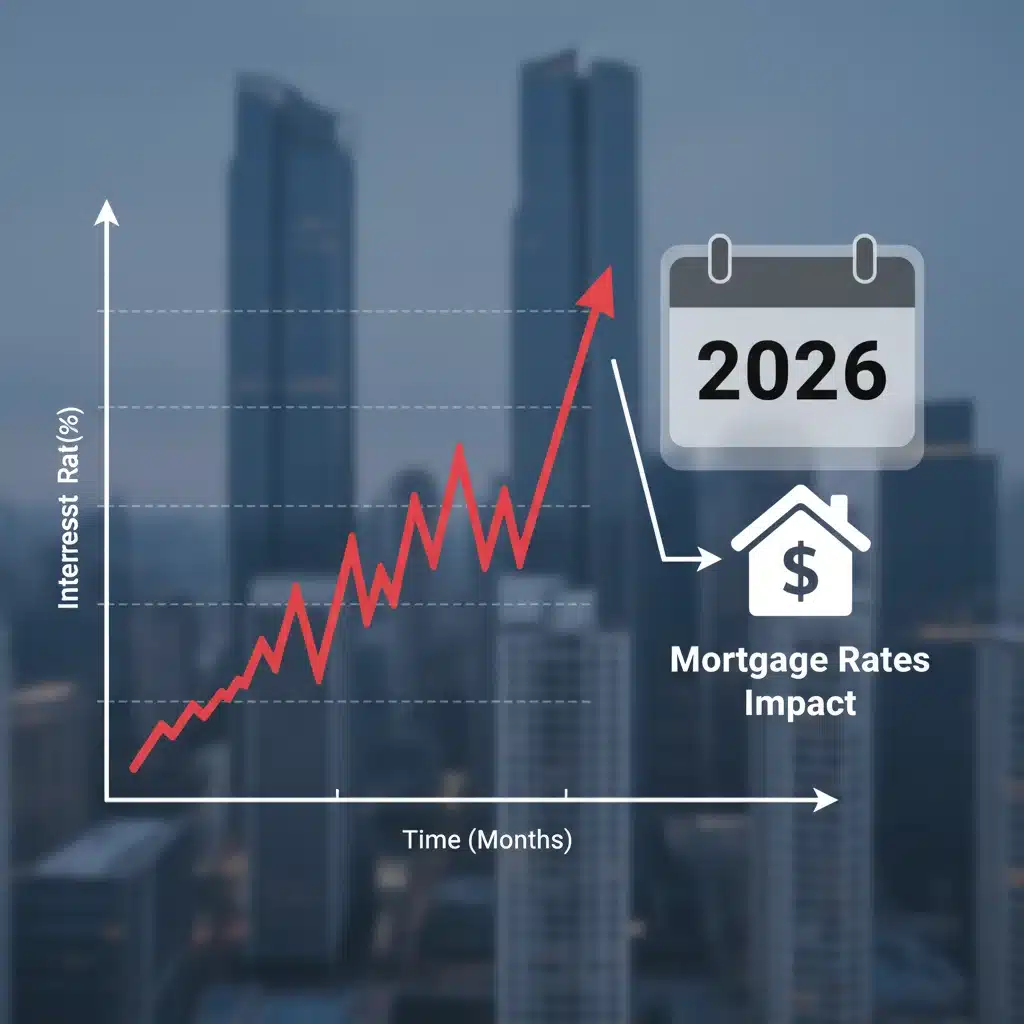
Forecasting mortgage rates precisely is challenging due to the multitude of variables involved. However, based on current economic trends, central bank guidance, and market consensus, we can outline a probable 3-month outlook for early 2026.  The prevailing sentiment among economists and financial institutions is that interest rates will likely remain elevated, with a potential for modest increases or stabilization at higher levels, rather than significant declines.
Here’s a breakdown of what to anticipate:
- Continued Volatility: The first few months of 2026 are expected to see continued volatility in mortgage rates. Economic data releases (inflation, employment), geopolitical developments, and central bank communications will likely cause day-to-day or week-to-week fluctuations.
- Potential for Modest Increases: If inflation proves more stubborn than anticipated or if economic growth remains robust, central banks might feel compelled to implement further modest rate hikes. These would directly translate to higher mortgage rates. The mortgage rate forecast hinges significantly on the inflation trajectory.
- Stabilization at Higher Levels: Even without further hikes, rates are likely to stabilize at levels higher than those observed in the pre-tightening cycle. This means homebuyers should prepare for a ‘new normal’ of higher borrowing costs compared to the exceptionally low rates of the pandemic era.
- Impact on Different Mortgage Products:
- Fixed-Rate Mortgages (FRMs): These rates are generally more sensitive to long-term bond yields and market expectations of future inflation and central bank policy. If the outlook remains hawkish, FRMs will likely reflect this with higher rates.
- Adjustable-Rate Mortgages (ARMs): ARMs are typically tied to short-term interest rate indexes. While their initial rates might be lower than FRMs, they are more susceptible to increases if central banks continue to raise their benchmark rates during the adjustment periods.
The key takeaway for the early 2026 mortgage rate forecast is prudence and preparedness. While dramatic spikes might be less likely if the bulk of central bank tightening is behind us, sustained high rates or incremental increases are a real possibility. Homebuyers should factor these higher borrowing costs into their affordability calculations and consider the long-term implications of their mortgage choices.
Moreover, the supply of homes on the market will continue to influence pricing. If inventory remains low, despite higher rates, home prices may not fall significantly, adding another layer of challenge for prospective buyers. This complex interplay between rates, prices, and inventory defines the housing market’s immediate future.
Strategies for Homebuyers in a Rising Rate Environment
Navigating the housing market when the mortgage rate forecast points to higher rates requires a strategic approach. For prospective homebuyers, understanding how to mitigate the impact of increased borrowing costs is crucial for achieving homeownership goals.
Here are some key strategies:
- Get Pre-Approved: A pre-approval locks in an interest rate for a certain period, typically 30 to 90 days. This provides certainty and protects you from potential rate increases during your home search. It also shows sellers you are a serious and qualified buyer.
- Shop Around for Lenders: Different lenders offer varying rates and terms. It’s essential to compare offers from multiple banks, credit unions, and mortgage brokers to find the most competitive rate and favorable conditions. Even a small difference in the interest rate can amount to significant savings over the life of the loan.
- Consider a Shorter Loan Term: While a 15-year fixed-rate mortgage will have higher monthly payments than a 30-year term, it typically comes with a lower interest rate and allows you to pay off the loan faster, saving a substantial amount in interest over time.
- Increase Your Down Payment: A larger down payment reduces the amount you need to borrow, thereby lessening the impact of higher interest rates on your monthly payments. It can also help you avoid private mortgage insurance (PMI) and potentially qualify for better loan terms.
- Improve Your Credit Score: A strong credit score is paramount for securing the best possible interest rates. Lenders view borrowers with excellent credit as less risky, offering them more favorable terms. Focus on paying bills on time, reducing debt, and avoiding new credit inquiries before applying for a mortgage.
- Explore Mortgage Points: ‘Buying down’ your interest rate by paying mortgage points upfront can be a viable strategy. Each point typically costs 1% of the loan amount and can reduce your interest rate. Calculate if the long-term savings outweigh the upfront cost, especially if you plan to stay in the home for an extended period.
- Budget Realistically: With higher rates, your monthly mortgage payments will be larger. Create a detailed budget that accounts for these increased costs, along with property taxes, homeowner’s insurance, and potential maintenance expenses. Ensure your housing costs remain within a comfortable percentage of your income.
- Don’t Rush into an ARM Without Understanding the Risks: While ARMs might offer lower initial rates, they come with the risk of significant payment increases when the adjustable period begins. Understand the cap structures, adjustment intervals, and indexes before committing to an ARM.
The overarching theme for homebuyers in this environment is meticulous planning and proactive engagement. By understanding the mortgage rate forecast and implementing these strategies, you can position yourself more favorably in a challenging market.
Implications for Current Homeowners: Refinancing and Equity
Current homeowners also need to pay close attention to the mortgage rate forecast for 2026, as it can impact decisions regarding refinancing, home equity, and overall financial planning.
Here’s how higher rates might affect existing homeowners:
- Refinancing Opportunities: In a rising rate environment, refinancing to secure a lower interest rate becomes less appealing or even unfeasible for many. Homeowners who locked in historically low rates during previous periods are likely to hold onto their existing mortgages. However, there might still be opportunities for cash-out refinances if equity has significantly increased, though the new rate will likely be higher than their current one. It’s crucial to weigh the benefits against the increased interest cost.
- Home Equity Lines of Credit (HELOCs) and Home Equity Loans: These products are often tied to prime rates, which move in tandem with the federal funds rate. As interest rates rise, the cost of borrowing against your home equity will also increase. Homeowners with HELOCs should be prepared for higher monthly payments if they have outstanding balances. For those considering new HELOCs or home equity loans, the cost of borrowing will be higher than in recent years.
 Careful consideration of the necessity and repayment capacity is vital.
- Impact on Home Value: While higher mortgage rates generally put downward pressure on home prices by reducing affordability and demand, the actual impact can vary by local market conditions. Strong local economies, limited inventory, and sustained demand can help support home values even with elevated rates. However, in less robust markets, price appreciation might slow or even reverse.
- Managing Existing Debt: Homeowners with adjustable-rate mortgages (ARMs) from previous cycles, especially those nearing their adjustment period, face the most direct impact. Their monthly payments could increase significantly. It’s essential to review your ARM terms and explore options, such as refinancing into a fixed-rate mortgage if feasible, or accelerating principal payments to reduce the impact of future rate adjustments.
- Property Tax and Insurance Increases: Beyond mortgage rates, homeowners should also budget for potential increases in property taxes and homeowner’s insurance premiums. These costs can add to the overall burden of homeownership, irrespective of mortgage rate changes.
For current homeowners, the focus should be on financial resilience. Reviewing your existing mortgage terms, assessing your home equity, and understanding the implications of a higher interest rate environment on your overall financial health are crucial steps. Consulting with a financial advisor can provide personalized guidance tailored to your specific situation, helping you make informed decisions in light of the evolving mortgage rate forecast.
Long-Term Economic Projections Beyond the 3-Month Window
While our primary focus is on the 3-month mortgage rate forecast for early 2026, it’s beneficial to briefly consider the longer-term economic projections. The trajectory of interest rates beyond this short window will continue to be shaped by the same fundamental forces: inflation, economic growth, and central bank policy.
Many economists anticipate that central banks will eventually achieve their inflation targets, leading to a period of more stable interest rates. However, the consensus is that a return to the ultra-low rates seen in the decade leading up to 2022 is unlikely in the foreseeable future. The ‘neutral’ interest rate, which neither stimulates nor restricts economic growth, is generally believed to be higher than previously thought.
This means that while the aggressive hiking cycle might conclude, mortgage rates could settle at a ‘new normal’ that is moderately higher than what many homeowners and buyers have become accustomed to. This shift has profound implications for long-term financial planning, affordability, and investment strategies in the housing market.
Factors that could influence the longer-term outlook include:
- Productivity Growth: Higher productivity can allow for stronger economic growth without triggering inflation, potentially enabling lower interest rates.
- Demographic Shifts: Population growth and household formation rates will continue to drive housing demand, influencing prices and the overall market dynamic.
- Government Fiscal Policy: Government spending and borrowing can impact bond yields and, by extension, mortgage rates. Large deficits can put upward pressure on rates.
- Technological Advancements: Innovation can both boost productivity and potentially create new inflationary pressures or efficiencies.
Understanding these long-term trends provides context for the short-term mortgage rate forecast. It underscores the importance of adopting a flexible and informed approach to housing and personal finance, recognizing that the economic landscape is always evolving.
Conclusion: Navigating the 2026 Mortgage Landscape
The 3-month outlook for the mortgage rate forecast in early 2026 suggests a period of elevated and potentially volatile rates, largely influenced by central bank efforts to combat inflation. While significant new rate hikes might diminish, stabilization at higher levels or modest increases remain distinct possibilities. This environment necessitates a proactive and informed approach for both prospective homebuyers and current homeowners.
For buyers, strategies such as securing pre-approvals, shopping around for lenders, increasing down payments, and improving credit scores will be critical. Understanding the nuances of different mortgage products, particularly the risks associated with ARMs, is also paramount. For current homeowners, the focus shifts to carefully evaluating refinancing opportunities, managing existing debt, particularly ARMs and HELOCs, and understanding the implications for home equity and overall financial health.
The housing market and broader economy are complex systems, and while forecasts provide valuable guidance, they are subject to change based on evolving data and unforeseen events. Therefore, continuous monitoring of economic indicators, central bank communications, and professional financial advice will be your best allies in navigating the mortgage landscape of 2026 and beyond. By staying informed and adopting a strategic mindset, you can make sound financial decisions that align with your long-term housing and wealth-building goals, regardless of where the mortgage rate forecast ultimately lands.