Cybersecurity Threats Skyrocket: US Financial Institutions Face 15% Surge in Attacks

Advertisement
Exclusive Report: Cybersecurity Threats to US Financial Institutions Increased by 15% in the Last 3 Months of 2025
The digital frontier of finance is under siege. An alarming new report reveals a significant 15% increase in financial cybersecurity threats targeting US financial institutions during the final quarter of 2025. This surge underscores an escalating battle between sophisticated threat actors and the guardians of our economic stability. As technology advances, so too do the methods of those seeking to exploit vulnerabilities, making robust cybersecurity measures more critical than ever before. This comprehensive analysis delves into the specifics of this increase, examining the types of attacks, their potential impacts, and the urgent strategies required to fortify defenses against the ever-evolving landscape of financial cybersecurity threats.
The financial sector, by its very nature, is a prime target for cybercriminals. Holding vast amounts of sensitive personal and financial data, these institutions represent high-value targets for data theft, fraud, and disruption. The latest figures from the last three months of 2025 paint a stark picture: a measurable uptick in attacks that range from intricate phishing schemes to devastating ransomware assaults. This trend is not merely an incremental rise; it signifies a strategic escalation by adversaries, forcing financial institutions to rethink and reinforce their entire cybersecurity posture. Understanding the nuances of these financial cybersecurity threats is the first step towards effective mitigation.
Understanding the Escalation of Financial Cybersecurity Threats
What factors are contributing to this alarming increase in financial cybersecurity threats? Several converging elements appear to be at play. Firstly, the increasing digitalization of financial services, while offering convenience and efficiency, also broadens the attack surface. More online transactions, mobile banking apps, and interconnected systems create additional entry points for malicious actors. Secondly, geopolitical tensions and the rise of state-sponsored cyber warfare have amplified the sophistication and resources available to certain threat groups. These actors often target critical infrastructure, with financial institutions being a primary objective due to their systemic importance.
Advertisement
Furthermore, the rapid evolution of AI and machine learning, while beneficial for defensive strategies, is also being leveraged by attackers to create more convincing phishing campaigns, automate attacks, and bypass traditional security protocols. The ‘human element’ remains a significant vulnerability; social engineering tactics continue to be highly effective, often serving as the initial breach point for more complex attacks. The sheer volume and velocity of new malware variants and zero-day exploits also contribute to the challenge, making it difficult for even the most advanced security systems to keep pace. Addressing these multifaceted drivers is essential to effectively combat the rising tide of financial cybersecurity threats.
Key Threat Vectors Identified in Q4 2025
The report highlights several predominant threat vectors that contributed to the 15% increase in financial cybersecurity threats. Ransomware attacks have seen a resurgence, with more targeted and impactful campaigns. Instead of broad, indiscriminate attacks, threat actors are now focusing on high-value targets within financial institutions, demanding larger ransoms and often exfiltrating data before encryption to add leverage. This ‘double extortion’ tactic significantly increases the stakes for affected organizations.
Phishing and spear-phishing remain pervasive, evolving in their sophistication. Attackers are employing highly personalized emails, often impersonating senior executives or trusted vendors, to trick employees into revealing credentials or installing malware. Business Email Compromise (BEC) scams, which often stem from successful phishing, continue to cause substantial financial losses by manipulating employees into making unauthorized wire transfers.
Advertisement
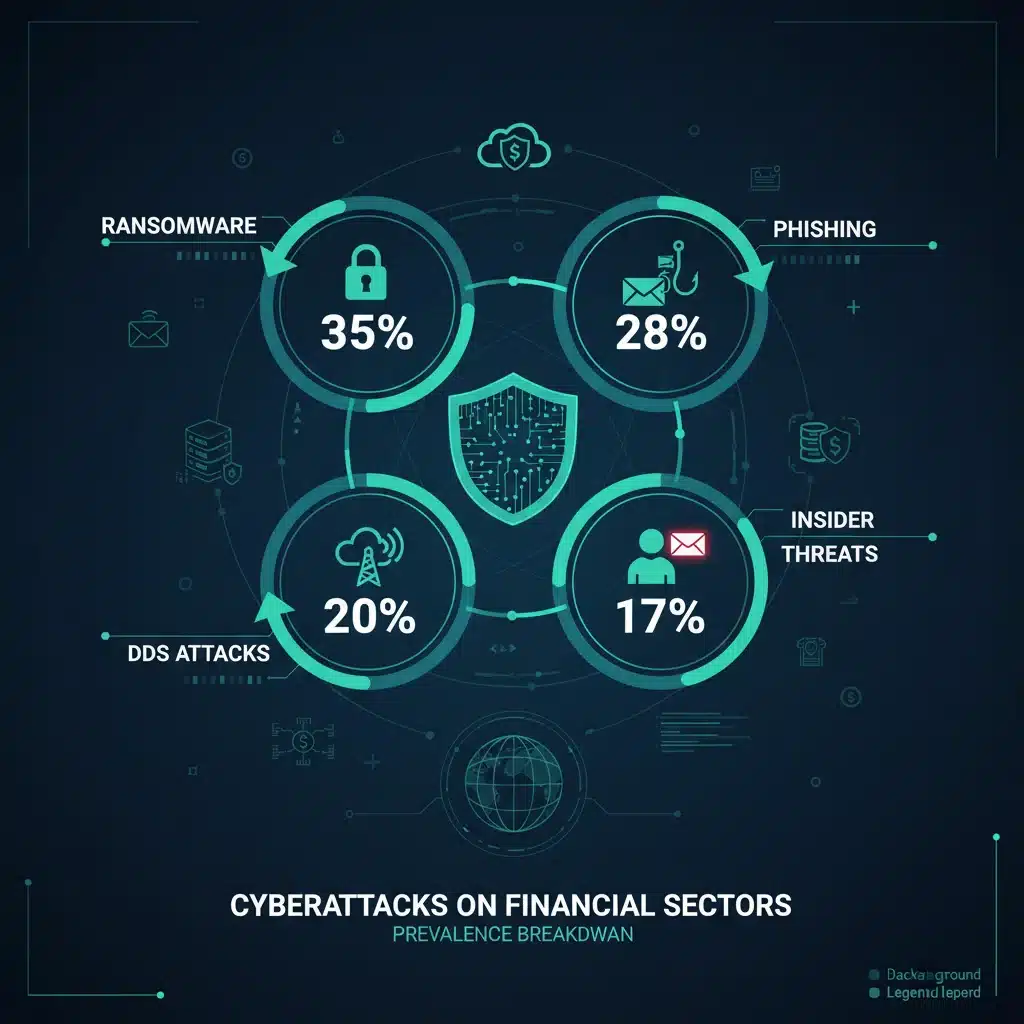
Distributed Denial of Service (DDoS) attacks also saw a notable increase, often used as a smokescreen for other malicious activities or simply to disrupt operations and damage reputation. Insider threats, both malicious and accidental, continue to pose a significant risk, with the report indicating a slight but concerning rise in incidents linked to compromised employee accounts or disgruntled staff. These varied attack methods underscore the diverse nature of financial cybersecurity threats and the need for a multi-layered defense strategy.
The Impact on US Financial Institutions and the Broader Economy
The consequences of these escalating financial cybersecurity threats extend far beyond individual institutions. Data breaches can lead to massive financial losses through recovery costs, regulatory fines, and legal fees. Reputational damage can be even more severe, eroding customer trust and leading to significant client attrition. For institutions operating in a highly competitive market, a major cyber incident can have long-lasting, detrimental effects on their standing and profitability.
Beyond the direct impact on financial entities, the broader US economy faces systemic risks. Interconnectedness within the financial system means that a successful attack on one institution can have ripple effects across others, potentially disrupting market stability and consumer confidence. The integrity of financial data is paramount for economic operations, and any compromise can undermine the foundational trust upon which the system operates. Regulators are increasingly scrutinizing cybersecurity practices, imposing stricter compliance requirements and heavier penalties for failures, further emphasizing the gravity of managing financial cybersecurity threats effectively.
Case Studies and Emerging Trends
While specific incidents are often kept confidential, the report alludes to several high-profile cases during Q4 2025 where financial institutions faced significant challenges. One notable trend is the targeting of third-party vendors and supply chains. Attackers are increasingly recognizing that smaller, less secure vendors can serve as a convenient backdoor into larger, more fortified financial organizations. This supply chain vulnerability represents a critical area of concern and a growing vector for financial cybersecurity threats.
Another emerging trend is the weaponization of deepfake technology. While still in its nascent stages, there are indications that sophisticated actors are beginning to use AI-generated audio and video to create highly convincing social engineering attacks, particularly for BEC scams or to gain unauthorized access. This represents a new frontier in psychological manipulation and adds another layer of complexity to authenticating communications within financial environments. The proactive identification and understanding of these emerging trends are crucial for staying ahead of financial cybersecurity threats.
Mitigation Strategies: Fortifying Defenses Against Financial Cybersecurity Threats
In light of the escalating financial cybersecurity threats, financial institutions must adopt a multi-faceted and proactive approach to security. A reactive stance is no longer sufficient; continuous vigilance and adaptive strategies are paramount. Here are key mitigation strategies that are proving effective:
1. Enhanced Threat Intelligence and Sharing
Sharing timely and actionable threat intelligence among financial institutions and with government agencies is crucial. Collaborative platforms allow organizations to learn from each other’s experiences, identify emerging attack patterns, and implement preventative measures more rapidly. This collective defense mechanism strengthens the overall resilience of the financial sector against financial cybersecurity threats.
2. Robust Employee Training and Awareness
Since the human element remains a primary vulnerability, comprehensive and continuous cybersecurity training for all employees is non-negotiable. This training should go beyond basic phishing awareness to include identifying social engineering tactics, understanding insider threat risks, and adhering to strict security protocols. Regular simulated phishing exercises can help reinforce learned behaviors and identify areas for improvement.
3. Advanced Security Technologies
Investing in cutting-edge security technologies is essential. This includes AI-powered anomaly detection systems, advanced endpoint detection and response (EDR) solutions, next-generation firewalls, and robust intrusion prevention systems. Multi-factor authentication (MFA) should be implemented universally, especially for accessing sensitive systems and data. Furthermore, embracing Zero Trust architectures, where no user or device is inherently trusted, can significantly reduce the risk of lateral movement within a compromised network.

4. Incident Response and Recovery Planning
Even with the best defenses, breaches can occur. Therefore, having a well-defined, regularly tested incident response plan is critical. This plan should detail the steps for detecting, containing, eradicating, and recovering from a cyberattack. Business continuity and disaster recovery plans must be integrated with cybersecurity incident response to ensure minimal disruption to operations and rapid restoration of services. Regular tabletop exercises help refine these plans and ensure all stakeholders understand their roles during a crisis involving financial cybersecurity threats.
5. Third-Party Risk Management
Given the increasing exploitation of supply chain vulnerabilities, financial institutions must implement rigorous third-party risk management programs. This involves thorough due diligence of all vendors and partners, contractual obligations for cybersecurity standards, and continuous monitoring of their security posture. Regular security audits and assessments of third-party providers are essential to mitigate this growing area of financial cybersecurity threats.
6. Regulatory Compliance and Governance
Adhering to evolving regulatory frameworks (e.g., NIST, ISO 27001, GLBA) is not just about avoiding penalties; it’s about establishing a baseline for effective cybersecurity. Strong governance, including dedicated cybersecurity leadership, clear policies, and regular board-level oversight, ensures that cybersecurity is treated as a strategic business imperative rather than just an IT function. Continuous auditing and compliance checks help maintain a strong security posture against financial cybersecurity threats.
The Future of Financial Cybersecurity in the US
Looking ahead, the landscape of financial cybersecurity threats will continue to evolve rapidly. Institutions must prepare for even more sophisticated attacks, potentially involving quantum computing capabilities and advanced AI-driven reconnaissance. The convergence of physical and cyber threats, particularly in critical infrastructure, also presents a growing concern. Proactive investment in research and development, fostering a culture of innovation in cybersecurity, and attracting top talent will be crucial for maintaining a competitive edge against adversaries.
The role of government and international cooperation will also expand. Collaborative efforts to share intelligence, develop common standards, and pursue cybercriminals across borders will be vital in addressing the global nature of financial cybersecurity threats. Public-private partnerships can leverage the strengths of both sectors to create a more resilient and secure financial ecosystem.
Conclusion
The 15% increase in financial cybersecurity threats against US financial institutions in the last three months of 2025 is a stark warning. It signifies a critical juncture where complacency is not an option. Financial organizations must move beyond traditional security paradigms and embrace a holistic, adaptive, and intelligence-driven approach to cybersecurity. By understanding the evolving threat landscape, investing in advanced technologies, empowering their workforce through continuous training, and fostering collaboration, they can build a formidable defense against the relentless tide of cyber adversaries.
The security of our financial system is a shared responsibility. Through collective effort and unwavering commitment, we can safeguard sensitive data, protect economic stability, and ensure the continued trust of consumers in the digital age. The challenges are significant, but with strategic planning and robust execution, US financial institutions can emerge stronger and more resilient in the face of these escalating financial cybersecurity threats.