EPA’s New Environmental Regulations 2026: Impact on US Businesses
Advertisement
Major Policy Shift: EPA’s New Environmental Regulations for 2026 to Affect 20,000 US Businesses
The landscape of environmental compliance for businesses across the United States is on the cusp of a transformative change. The Environmental Protection Agency (EPA) has announced a comprehensive set of new environmental regulations slated to take effect in 2026. This significant policy shift is projected to directly impact over 20,000 US businesses, spanning a multitude of sectors from manufacturing and energy to agriculture and transportation. Understanding the nuances of these upcoming EPA Regulations 2026 is not merely a matter of legal obligation but a critical strategic imperative for long-term sustainability and competitiveness.
For decades, environmental policy has evolved incrementally, but the EPA Regulations 2026 represent a more aggressive and far-reaching approach aimed at tackling climate change, reducing pollution, and promoting a greener economy. Businesses that proactively prepare for these changes will not only mitigate risks but also uncover new opportunities for innovation, efficiency, and market leadership. This article delves deep into the specifics of these regulations, exploring their potential impact, the challenges they present, and the strategies businesses can employ to ensure compliance and thrive in this new environmental era.
Understanding the Scope of New EPA Regulations 2026
The forthcoming EPA Regulations 2026 are not a monolithic directive but rather a multifaceted suite of policies designed to address various environmental concerns. While the exact final details are still being refined, the core tenets involve stricter emissions standards, enhanced waste management protocols, increased reporting requirements, and a greater emphasis on sustainable practices across the supply chain. These regulations are primarily aimed at reducing greenhouse gas emissions, limiting the discharge of hazardous pollutants into air and water, and fostering a circular economy approach to resource utilization.
Advertisement
Key Areas of Focus for the EPA Regulations 2026:
- Emissions Reductions: Expect more stringent limits on carbon dioxide, methane, and other greenhouse gas emissions from industrial facilities and power plants. This will likely necessitate significant investments in cleaner technologies and renewable energy sources.
- Water Quality Protection: New standards for industrial wastewater discharge and stormwater runoff are anticipated, requiring businesses to upgrade treatment facilities and implement more effective pollution prevention measures.
- Waste Management and Recycling: The EPA is pushing for a reduction in landfill waste through enhanced recycling mandates, waste-to-energy initiatives, and stricter disposal guidelines for hazardous materials.
- Chemical Management: Increased scrutiny on the production, use, and disposal of certain chemicals will require businesses to re-evaluate their chemical inventories and supply chains.
- Environmental Justice: A significant component of the EPA Regulations 2026 is an increased focus on environmental justice, ensuring that the benefits of environmental protection are equitably distributed and that no community bears a disproportionate burden of pollution.
The breadth of these regulations means that businesses will need to conduct thorough assessments of their current operations, identify areas of non-compliance, and develop comprehensive action plans. This is not a one-size-fits-all scenario; the specific impact will vary greatly depending on the industry, geographical location, and current environmental footprint of each business. However, one thing is certain: ignoring these changes is not an option.
The Economic and Operational Impact on US Businesses
The direct impact of the EPA Regulations 2026 on the 20,000 affected US businesses will manifest in several ways. Firstly, there will be significant financial implications. Compliance often requires capital investments in new equipment, technologies, and infrastructure. This could include upgrading emission control systems, investing in advanced wastewater treatment, or implementing new waste segregation and recycling programs. Small and medium-sized enterprises (SMEs) might find these upfront costs particularly challenging, potentially necessitating government subsidies, grants, or innovative financing solutions.
Operational changes are also inevitable. Businesses will need to revise their processes, supply chain management, and potentially their product design to align with the new standards. For instance, manufacturers might need to source raw materials from suppliers with lower environmental footprints or redesign products to be more energy-efficient or easily recyclable. Increased monitoring, reporting, and record-keeping will also add to administrative burdens, requiring dedicated resources and specialized expertise.
Advertisement
Beyond direct costs, there are also indirect economic impacts. Businesses that fail to comply could face substantial fines, legal penalties, and reputational damage. Conversely, those that embrace the spirit of the EPA Regulations 2026 and go beyond mere compliance can gain a competitive edge. This could translate into improved brand image, increased consumer loyalty, access to new markets (e.g., green procurement contracts), and potentially lower operational costs through enhanced efficiency and reduced waste.
Challenges and Opportunities for Compliance
Navigating the complexities of the EPA Regulations 2026 will undoubtedly present a range of challenges. The sheer volume and detail of the new rules can be overwhelming, requiring significant time and resources for interpretation and implementation. Furthermore, technological barriers may exist for some industries, where readily available and cost-effective solutions for meeting new standards are not yet widespread. The need for skilled personnel to manage environmental compliance and implement new green technologies will also increase, potentially leading to a talent gap.
However, alongside these challenges lie significant opportunities. The push for environmental compliance can be a powerful catalyst for innovation. Businesses may discover more efficient production methods, develop new sustainable products and services, and create entirely new revenue streams. For example, companies investing in renewable energy or energy efficiency upgrades might see long-term savings on energy costs. Those that master waste reduction and recycling could transform waste into valuable resources, embodying the principles of a circular economy.
Strategic Approaches to Embrace the EPA Regulations 2026:
- Conduct a Comprehensive Environmental Audit: Start by understanding your current environmental footprint, identifying areas of non-compliance, and assessing potential risks and opportunities.
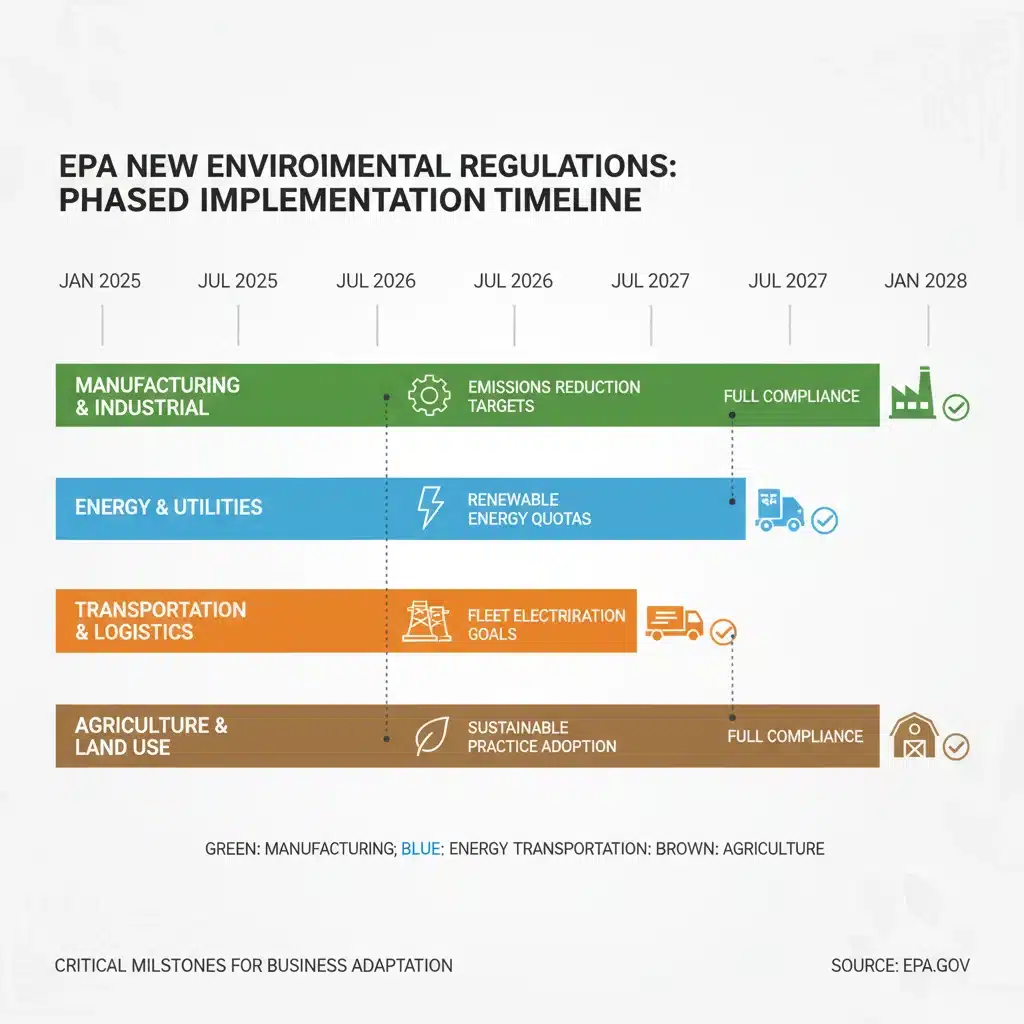
- Develop a Phased Compliance Plan: Break down the regulatory requirements into manageable steps, setting realistic timelines and allocating necessary resources. Prioritize areas with the highest impact or shortest compliance deadlines.
- Invest in Green Technologies: Explore and adopt cleaner production technologies, energy-efficient equipment, and advanced pollution control systems. Consider renewable energy integration.
- Engage Stakeholders: Foster open communication with employees, suppliers, customers, and local communities. Employee training on new procedures and environmental awareness will be crucial.
- Seek Expert Guidance: Consult with environmental consultants, legal experts, and industry associations to ensure accurate interpretation and effective implementation of the regulations.
- Explore Financial Incentives: Research government grants, tax credits, and loan programs designed to support businesses in adopting sustainable practices.
Sector-Specific Considerations for EPA Regulations 2026
While the EPA Regulations 2026 will have a broad impact, certain sectors will feel the effects more acutely. Understanding these sector-specific considerations is vital for targeted preparation.
Manufacturing Sector:
Manufacturers, particularly those in heavy industries like chemicals, steel, and automotive, will face intensified scrutiny on emissions, waste generation, and water usage. Expect requirements for advanced emission control technologies, stricter limits on volatile organic compounds (VOCs), and mandates for industrial wastewater treatment. Opportunities lie in process optimization, material substitution, and transitioning to circular manufacturing models where waste is minimized and resources are reused.
Energy Sector:
The energy sector, especially fossil fuel-based power generation, will be at the forefront of emissions reductions. The EPA Regulations 2026 will likely accelerate the transition towards renewable energy sources such as solar, wind, and geothermal. Companies in this sector will need to invest heavily in carbon capture technologies, retire older, less efficient plants, and diversify their energy portfolios to include more sustainable options.
Agriculture Sector:
While often seen as separate, agriculture is a significant contributor to greenhouse gas emissions (e.g., methane from livestock, nitrous oxide from fertilizers) and water pollution (e.g., nutrient runoff). The new regulations might introduce incentives or mandates for sustainable farming practices, improved manure management, precision agriculture techniques to reduce fertilizer use, and conservation efforts to protect water bodies. This could lead to a shift towards more eco-friendly farming methods and technologies.
Transportation Sector:
The transportation sector will likely see continued pushes for electric vehicles (EVs), stricter fuel efficiency standards for internal combustion engines, and potentially regulations targeting emissions from shipping and aviation. Businesses involved in logistics and freight will need to consider fleet electrification, route optimization to reduce fuel consumption, and investments in sustainable transport infrastructure.
Waste Management and Recycling Industries:
These industries will experience both increased demand and heightened regulatory oversight. The EPA Regulations 2026 will likely boost the volume of materials requiring recycling and proper disposal, creating business opportunities. However, they will also face stricter standards for landfill operations, incineration, and the processing of various waste streams, requiring advanced technologies and rigorous compliance.
The Role of Technology in Achieving Compliance
Technology will be an indispensable ally for businesses striving to meet the EPA Regulations 2026. From advanced monitoring systems to AI-driven optimization tools, technological solutions can simplify compliance, enhance efficiency, and even generate new business value.
Key Technologies for Environmental Compliance:
- Environmental Monitoring Systems: IoT sensors, drones, and satellite imagery can provide real-time data on emissions, air quality, water quality, and resource consumption, enabling proactive management and accurate reporting.
- Data Analytics and AI: Artificial intelligence and machine learning can analyze vast amounts of environmental data to identify trends, predict potential compliance issues, optimize processes for reduced environmental impact, and streamline reporting.
- Circular Economy Software: Platforms that track material flows, facilitate waste exchange, and optimize recycling processes can help businesses move towards a more circular model.
- Renewable Energy Solutions: Solar panels, wind turbines, and energy storage systems can help businesses reduce their reliance on fossil fuels and lower their carbon footprint.
- Advanced Filtration and Treatment Technologies: Innovations in air filtration, water purification, and waste treatment can significantly reduce pollutant discharge.
- Supply Chain Transparency Tools: Blockchain and other digital platforms can provide end-to-end visibility into supply chains, allowing businesses to verify the environmental performance of their suppliers and raw materials.
Embracing these technologies is not just about compliance; it’s about building a more resilient, efficient, and future-proof business model. The initial investment might be substantial, but the long-term benefits in terms of cost savings, reduced risk, and enhanced reputation can be significant.
Looking Beyond Compliance: Sustainability as a Competitive Advantage
While the immediate focus for many businesses will be on achieving compliance with the EPA Regulations 2026, forward-thinking organizations will look beyond mere adherence. Integrating sustainability into the core business strategy can transform environmental challenges into powerful competitive advantages.

Businesses that proactively adopt sustainable practices often experience a range of benefits:
- Enhanced Brand Reputation: Consumers, investors, and employees are increasingly valuing companies with strong environmental credentials. A commitment to sustainability can improve brand image and attract top talent.
- Operational Efficiencies: Sustainable practices often lead to reduced resource consumption (energy, water, raw materials) and waste generation, resulting in significant cost savings.
- Innovation and New Markets: The pursuit of sustainability can spur innovation, leading to the development of new eco-friendly products, services, and business models that tap into emerging green markets.
- Improved Investor Relations: Environmental, Social, and Governance (ESG) factors are becoming increasingly important for investors. Strong environmental performance can attract socially responsible investment and improve access to capital.
- Reduced Regulatory Risk: Companies that embed sustainability into their operations are often better positioned to adapt to evolving regulations, reducing the risk of fines and penalties.
- Employee Engagement: A strong commitment to environmental responsibility can boost employee morale, engagement, and retention, as employees often prefer to work for purpose-driven organizations.
The EPA Regulations 2026 should be viewed not as a burden but as a significant inflection point that encourages businesses to rethink their relationship with the environment. It’s an opportunity to innovate, optimize, and build a more resilient and responsible enterprise.
Conclusion: Preparing for a Greener Future with EPA Regulations 2026
The impending EPA Regulations 2026 mark a pivotal moment for over 20,000 US businesses. This major policy shift underscores a national commitment to addressing climate change and environmental degradation, pushing industries towards more sustainable operating models. While the journey to full compliance will present its share of challenges, including significant investments and operational overhauls, the opportunities for innovation, efficiency, and competitive advantage are equally profound.
Businesses that adopt a proactive and strategic approach will be best positioned to navigate this new regulatory landscape. This involves conducting thorough environmental assessments, developing robust compliance plans, investing in green technologies, and fostering a culture of sustainability throughout the organization. By embracing these changes, US businesses can not only meet their regulatory obligations but also contribute to a healthier planet, enhance their brand, and secure their place in a rapidly evolving global economy.
The time to prepare for the EPA Regulations 2026 is now. Those who act decisively will not just survive; they will thrive in the greener, more responsible future that these regulations are designed to usher in.